Your ergonomics policy can’t touch its toes.
Irish law already requires employers to assess the workstations of people who work at screens — the DSE assessments the HSA oversees. The only question is whether that duty stays on paper, or becomes something your team can feel by Friday.


The HSA requires your company to have an ergonomics policy. But a compliance document cannot physically realign a software developer’s neck or stop an accountant from slouching.
Espy Health Hub brings human expertise on-site to turn your mandatory paperwork into real physical habits, reducing your absenteeism and driving down stress claims.
How most companies meet the duty — and what it never changes.
On paper
A static handbook in every inbox, an automated quiz done in minutes — the box is ticked, and nothing about how anyone sits, moves or takes a break has changed.
In person
A qualified instructor, in your office
Real sessions on your own premises — someone who sees how your team actually sits and moves, and corrects it in person.
A regular slot in the working week
Not a one-off induction. A rhythm — so posture, mobility and screen breaks become habits, not reminders.
Habits that hold
Necks, shoulders, backs and breath: the physical side of your ergonomics policy, practised until it sticks.
“A perfectly adjusted chair can’t pump blood back to the heart or oxygenate a sluggish brain. Only regular movement can.”
From The Weight of the Desk
What the law actually asks of you.
Two instruments do the work. No scare tactics, no invented figures — the full guidance lives with the regulator, hsa.ie.
Safety, Health and Welfare at Work Act 2005
The foundation: employers owe their people a duty of care — identify the risks of the work, act on them, and record how in a safety statement.
General Application Regulations 2007 — Chapter 5 of Part 2: Display Screen Equipment
The desk-work specifics: assess the workstations of employees who habitually work at a screen (the DSE assessment), and give them the information and training to work well at one.
To be clear: an Espy programme complements your DSE duties — it doesn’t replace the formal assessment or your safety statement. For the documents themselves, work with your safety adviser. We’re the part that puts the policy into people’s bodies.
Questions, answered.
- What does the HSA require from employers?
- Under the Safety, Health and Welfare at Work Act 2005 and the General Application Regulations 2007, Irish employers must assess workplace risks — including workstation (DSE) assessments for employees who habitually work at screens — and act on what they find. The Health and Safety Authority (HSA) is the regulator, and hsa.ie carries the full guidance.
- Does an Espy programme replace a DSE assessment?
- No. The formal workstation assessment and your safety statement remain your legal duties, handled with your own safety adviser. What Espy adds is the practice side: regular, in-person sessions that turn the policy on paper into physical habits your team actually keeps.
- Why isn’t a PDF handbook or an online quiz enough?
- A handbook and a quiz can tick the information box, but a document can’t change how anyone sits, moves or takes breaks. Posture and screen habits are physical — they change through guided, repeated practice, which is exactly what an instructor in your office provides.
- How does this help with absenteeism and stress claims?
- We don’t publish figures — outcomes depend on your team. The logic is simple: people who move well, hold less tension and genuinely switch off are less likely to be out with desk-related complaints, and a company that visibly invests in its duty of care is in a far stronger position than one with an unread PDF.
- Is Espy a health-and-safety consultancy?
- No. Espy Health Hub delivers the wellbeing practice — qualified facilitators, on your premises or in our studio, paid by the company. For the formal compliance documents, pair us with your safety officer or adviser; the two sides work best together.
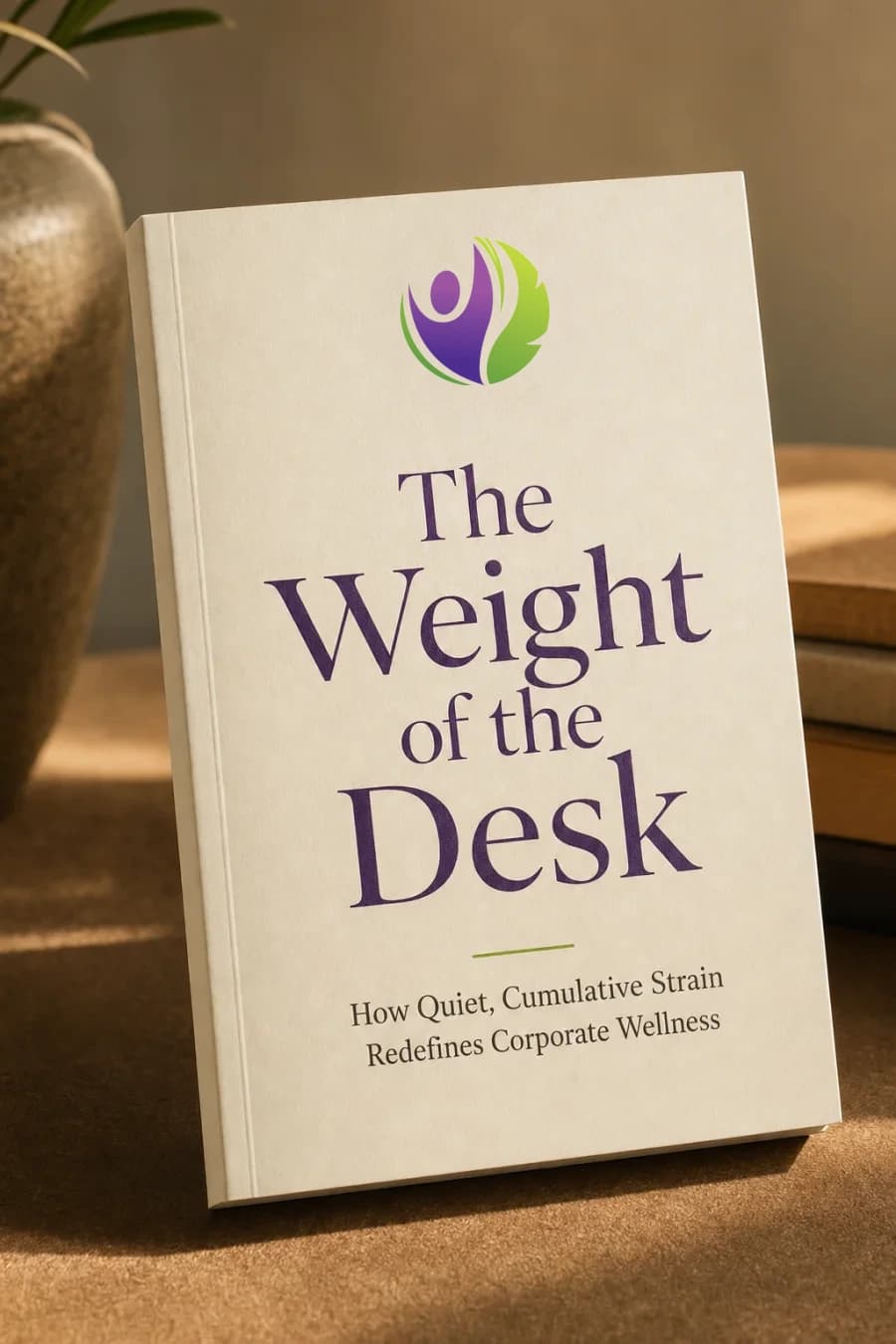
The Weight of the Desk
Everything on this page, in long form: the practical playbook for turning a mandatory ergonomics policy into habits a team actually keeps — written by the people who teach it in offices every week.
Put the policy on its feet.
Request a proposalThe real shift: from basic legal compliance to a culture of genuine, thriving human performance.
The law is one half of the business case. The other half is money — why workplace wellness can be tax-smart →
Espy Health Hub is not a health-and-safety consultancy and does not provide legal advice. Your compliance obligations depend on your circumstances — confirm the specifics with your safety adviser or the HSA.